We bulk bill echocardiogram and stress test for eligible patients with medicare.

Dr Jay Thakkar

Dr Jay ThakkarDr Jay ThakkarDr Jay Thakkar
  • Home
  • CLINIC SERVICES
    • Consultation
    • Echocardiogram
    • Stress Test
    • Holter Monitor
  • My Heart
    • Coronary Artery Disease
    • Heart Attack and Angina
    • Atrial fibrillation
  • Contact Us
  • Downloads
    • Angiography & Stenting
    • Electrophysiology
    • Transesophageal Echo TOE
    • Cardioversion
    • Pacemaker
    • ICD
    • Loop Recorder
  • More
    • Home
    • CLINIC SERVICES
      • Consultation
      • Echocardiogram
      • Stress Test
      • Holter Monitor
    • My Heart
      • Coronary Artery Disease
      • Heart Attack and Angina
      • Atrial fibrillation
    • Contact Us
    • Downloads
      • Angiography & Stenting
      • Electrophysiology
      • Transesophageal Echo TOE
      • Cardioversion
      • Pacemaker
      • ICD
      • Loop Recorder

Dr Jay Thakkar

Dr Jay ThakkarDr Jay ThakkarDr Jay Thakkar
  • Home
  • CLINIC SERVICES
    • Consultation
    • Echocardiogram
    • Stress Test
    • Holter Monitor
  • My Heart
    • Coronary Artery Disease
    • Heart Attack and Angina
    • Atrial fibrillation
  • Contact Us
  • Downloads
    • Angiography & Stenting
    • Electrophysiology
    • Transesophageal Echo TOE
    • Cardioversion
    • Pacemaker
    • ICD
    • Loop Recorder

Trans-esophageal echocardiogram

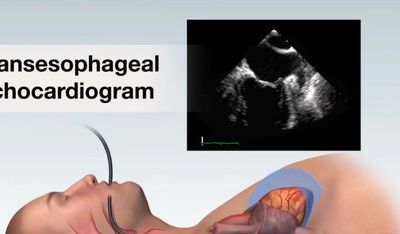
 A transesophageal echocardiogram (TOE) is a type of echocardiogram (ultrasound of the heart) that provides detailed images of the heart by inserting a special ultrasound probe into the esophagus, which is the tube that connects the throat to the stomach. This is done because the esophagus is located close to the heart, allowing for clearer and more precise images compared to a standard echocardiogram, which is performed on the chest.


How is the procedure performed?

  • You will be admitted to a day stay hospital or clinic for approx 4 hours. 
  • The patient is usually given a sedative to relax and a local anesthetic is applied to the back of the throat to reduce discomfort. In some cases, the patient may be fully sedated.
  • A flexible probe is inserted through the mouth and into the esophagus, positioned behind the heart. The probe uses sound waves (ultrasound) to create images of the heart's structures, including the chambers, valves, and blood vessels.
     

Why is TOE sometimes recommended? 

  • TOE is particularly helpful for examining areas of the heart that may not be easily seen with a standard echocardiogram, such as the left atrium, certain heart valves, or detecting  infections (like endocarditis), or defects (hole in heart).
  • TOE is commonly used to exclude clot in heart prior to giving an electric shock to reset the heart rhythm (Cardioversion). 

Trans esophageal echocardiogram (TOE) (pdf)Download

Copyright © 2026 Dr Jay Thakkar - All Rights Reserved.

  • Contact Us

Powered by

This website uses cookies.

We use cookies to analyze website traffic and optimize your website experience. By accepting our use of cookies, your data will be aggregated with all other user data.

Accept